


2027 Subaru Solterra Specs and Capability: Range, XT Power, Charging, AWD, and Trims

The 2027 Subaru Solterra carries the large gains made one year earlier into a new model year. It keeps up to 288 miles of range, quick DC charging, a NACS port, and standard all-wheel drive. Subaru also keeps the same starting price before destination. The small changes are in cabin trim and connected services.
That is good news for Connecticut EV shoppers. The core battery and motors are known. The trim plan is clear. The charge system is built for home use and long trips. The new trim details makes the 2027 Solterra easier to sort.
2027 Subaru Solterra battery, range, and charging specs
The Subaru of America 2027 Solterra release confirms a 74.7-kWh battery across the range. Premium can travel up to 288 miles on a full charge. Limited, Limited XT, and Touring XT are rated at 278 miles.
Core figures for every 2027 Solterra shopper
- Battery: A 74.7-kWh lithium-ion pack on every trim.
- Standard power: Premium and Limited make 233 horsepower.
- XT power: Limited XT and Touring XT make 338 horsepower.
- Fast charging: About 28 minutes from 10 to 80 percent in the right conditions.
- Peak charge rate: An estimated 150 kW on a suitable DC fast charger.
- Home charging: An 11-kW onboard charger for Level 2 use.
- Ground clearance: 8.3 inches on all trims.
Every 2027 Solterra uses a NACS port. That opens access to more than 25,000 charging points in North America. Battery preconditioning helps warm or cool the pack before a fast-charge stop. It matters most in winter, when a cold battery may charge at a slower rate.
The range gap between the standard and XT models is only 10 miles. In return, XT output rises by 105 horsepower. Subaru says an XT can reach 60 mph in less than five seconds. Premium and Limited are still quick at town speed because electric torque starts at once. Their lower output saves some range.
How the 2027 Solterra feels on Connecticut roads
Two electric motors give each Solterra standard Symmetrical All-Wheel Drive. The system can change power at each axle with no gear shift. That helps on a wet ramp, a snowy hill, or a dirt lot. X-MODE adds Grip Control and Downhill Assist for low-speed ground.
The battery sits low in the floor. That helps the Solterra feel planted through a bend. The ride is tuned more for calm travel than sharp sports-car moves. The cabin stays quiet at low speed. Wind and tire sound become easier to hear on I-84 because there is no gas engine in front.
XT power is best for drivers who want a much stronger merge or who face steep grades. The standard 233-horsepower setup is the range-led choice. Both use the same battery and charge hardware. Tires still set the main grip limit, so winter tires can add more cold-weather control than power alone.
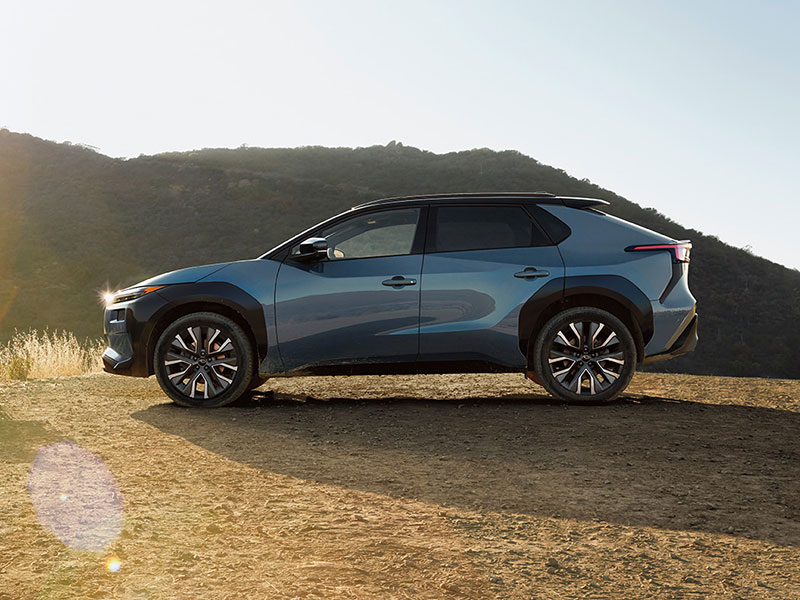
Four ways to use Solterra capability well
- Preheat while plugged in: Home power can warm the cabin before the trip starts.
- Use battery preconditioning: Prepare the pack before a planned cold fast-charge stop.
- Plan a backup charger: A second option helps if the first site is full or offline.
- Watch the load: Cold air, high speed, roof gear, and a full cabin can reduce range.
Premium, Limited, Limited XT, and Touring XT
Premium starts at $38,495 before destination. It has 18-inch wheels, 233 horsepower, heated front seats, StarTex upholstery, a power rear gate, and the standard 14-inch screen. The rear seats fold in a 60/40 split. Maximum cargo space is 63.5 cubic feet.
Limited starts at $41,395. It adds 20-inch wheels, seat memory, a power front passenger seat, heated rear seats, a heated wheel, a Harman Kardon sound system, a surround-view camera, auto park, and a 120-volt cargo outlet. Limited XT starts at $42,895 and adds the 338-horsepower motor setup.
Touring XT starts at $45,855. It adds a glass roof with a powered shade, front-seat ventilation, leg heaters, a camera rearview mirror, and black-and-blue leather seats. The leather trim is new for 2027. Subaru also includes a five-year trial of its connected service suite across the range.
How to plan a normal week with the Solterra
Start with home charge needs. Add the miles in a normal day. Then add a safe margin for rain, cold, and side trips. Most owners will not need a full pack each night. A set charge level can cover the week and still leave room for a new plan.
For a long trip, leave with the pack warm. Use the car's route tools. Pick a fast charge site near food or a rest stop. Check the site app before the car gets there. Keep one more site on the route. This plan takes a few minutes at home and can save time on the road.
Cold will change range. So will speed and wind. A roof box adds drag. A full car adds weight. Heat uses power too. No one fact will tell the whole tale. Watch the car's real use for a few weeks. That gives a better guide for the trips that come next.
Tire care is just as key. Check air when the tire is cold. Keep the tread in good shape. Use a true snow tire when ice is common. AWD can help the Solterra start. Tires help it turn and stop. That is why grip starts at the road, not at the motor.
Drivers can map public stops with the U.S. Department of Energy station locator. Charger power, weather, battery level, and site use can change the time at each stop. For cold New England days, battery preconditioning and NACS access helps the plan feel more secure. The 2027 Solterra keeps the range, charge speed, and AWD gains that made the prior update so useful.